Contents
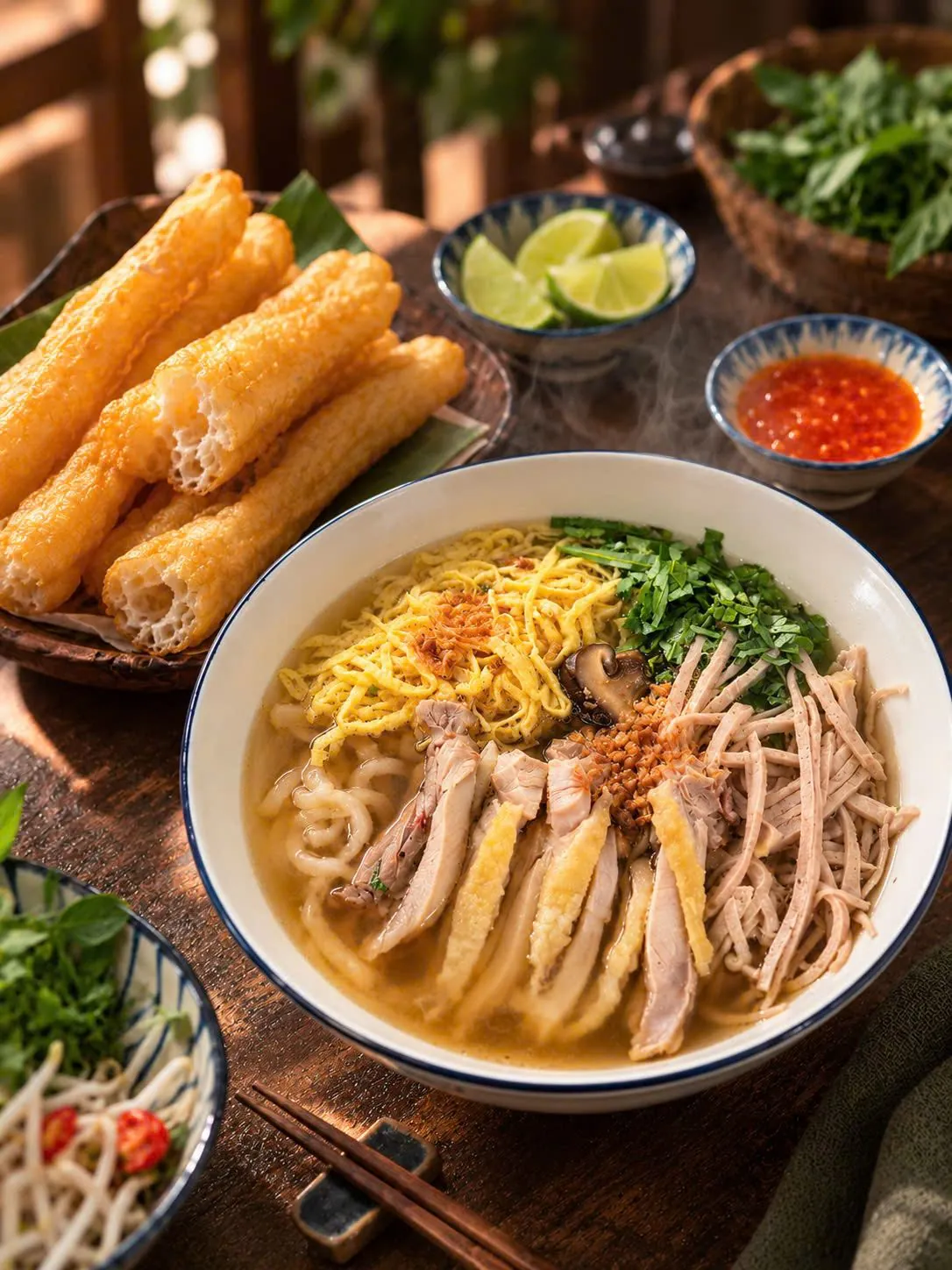
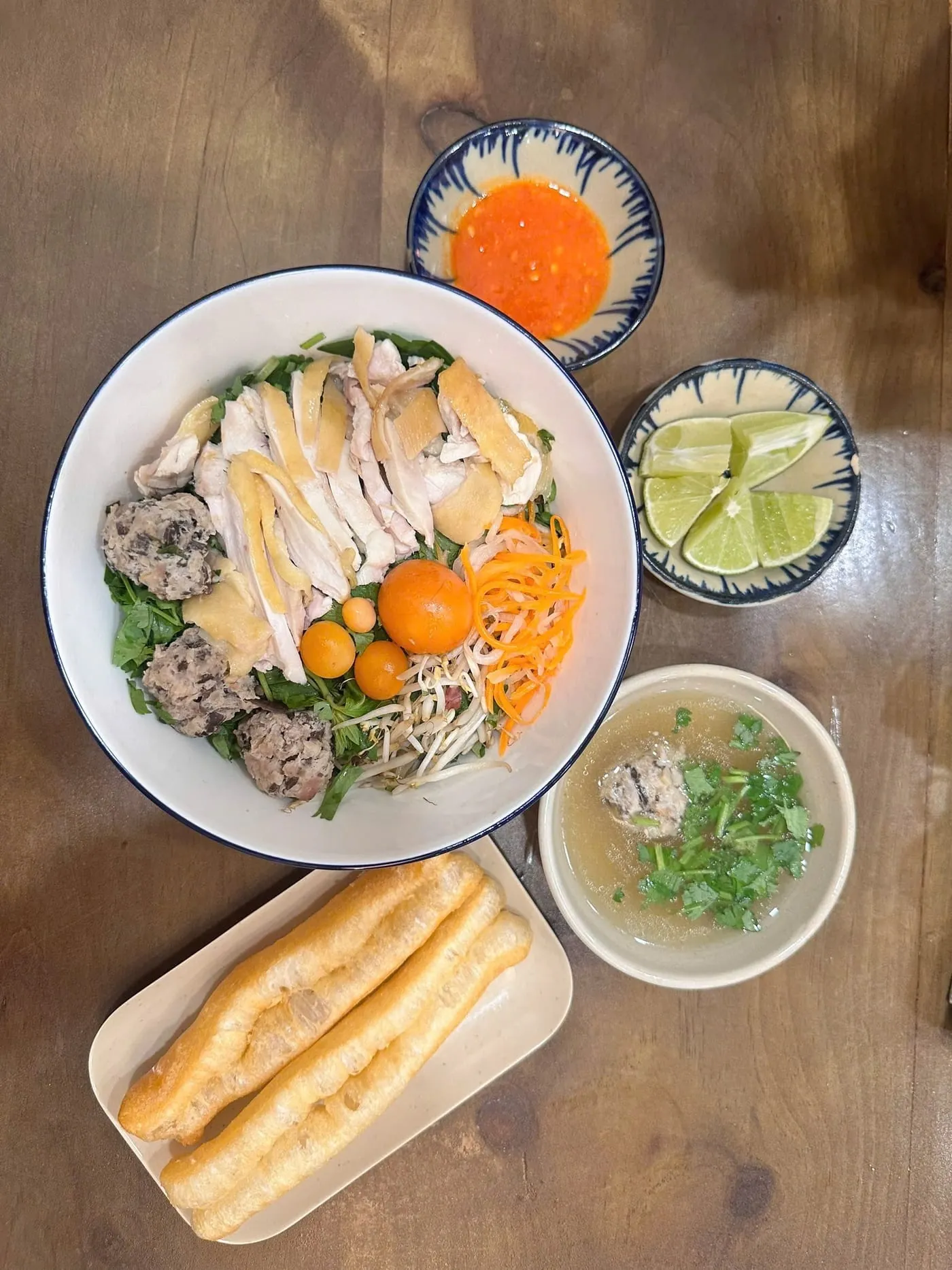
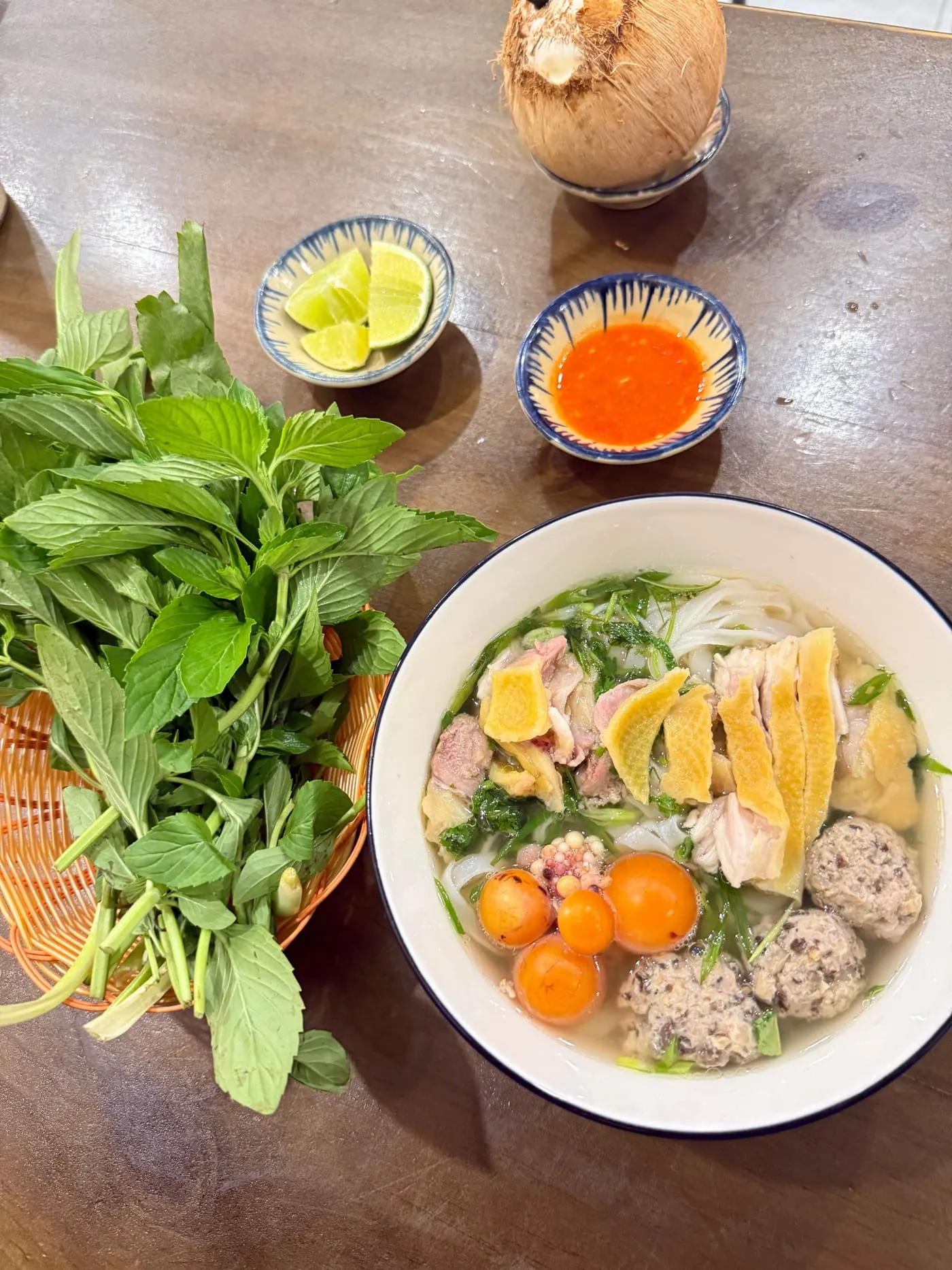
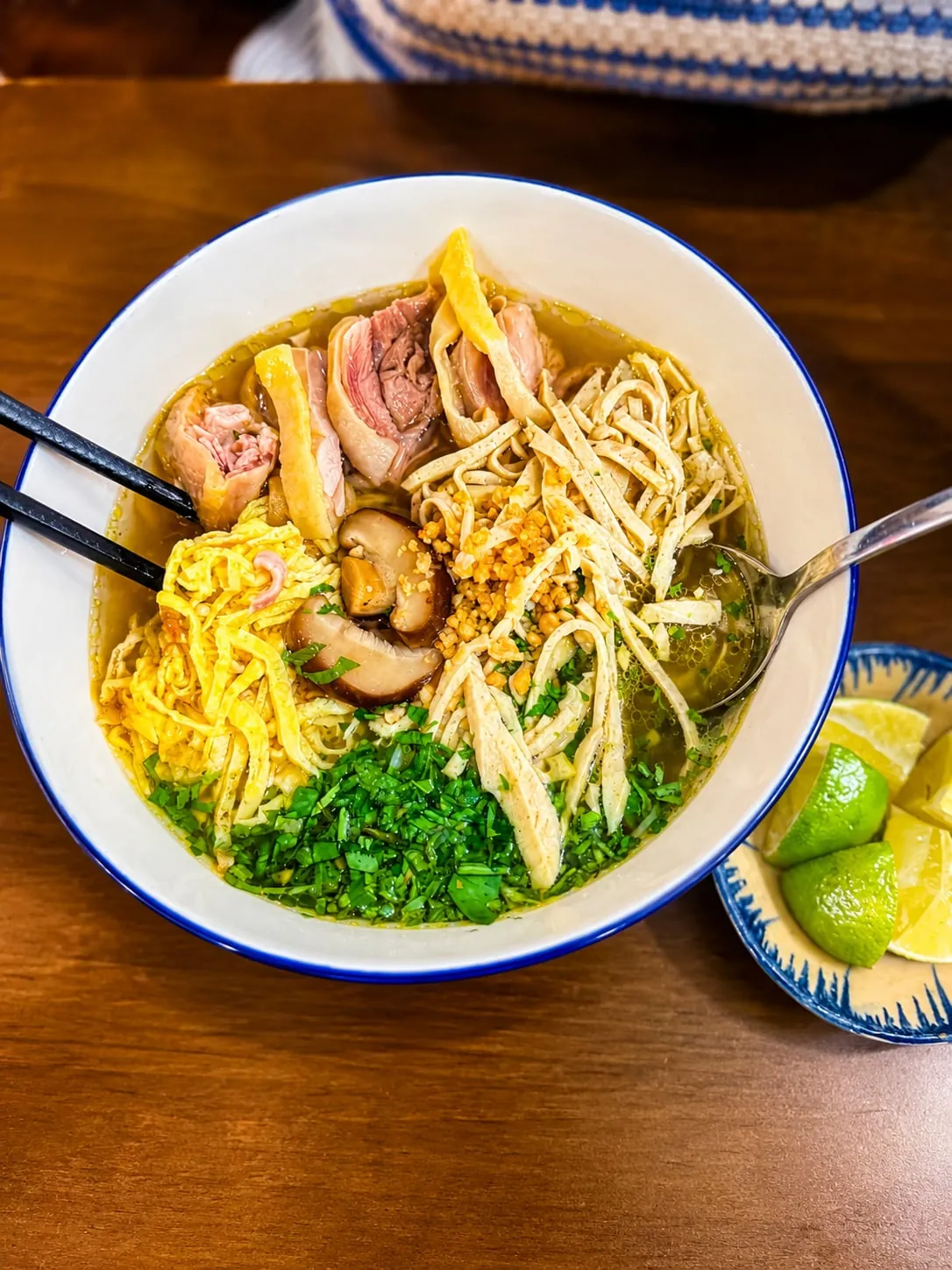
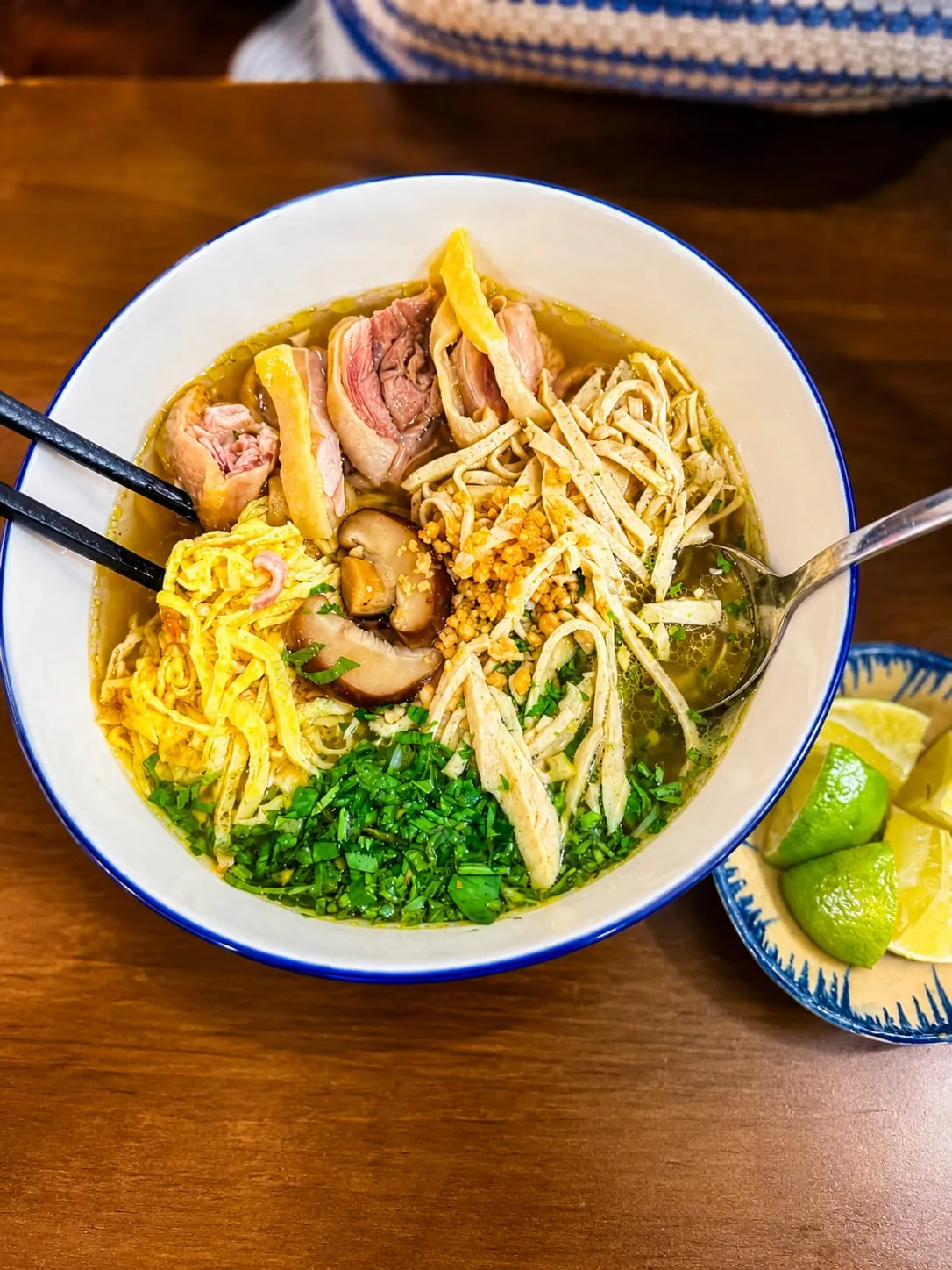
Bún thang is a bowl of noodles in clear broth, topped with strands of shredded chicken, thin strips of fried egg, pork sausage, shiitake mushrooms and a spoonful of shrimp floss. At a glance it looks simple. Anyone from Hanoi who has cooked it knows that almost everything in the bowl is prepared separately, cut thin and only then put together, and that the bowl is good only when nothing overpowers anything else.
What goes into a bowl of bún thang
In the traditional Hanoi way, a bowl has rice vermicelli, shredded free-range chicken, thin strips of fried egg, sliced giò lụa (Vietnamese pork sausage), shrimp floss, shiitake mushrooms, sweet and sour pickled dried radish, rau răm and scallion. People say a proper bowl takes around 20 ingredients, counting the broth. So many things, and none may stand out: that is where the difficulty lies.
- Rice vermicelli
- Shredded free-range chicken
- Thin strips of fried egg
- Sliced giò lụa (pork sausage)
- Shiitake mushrooms
- Shrimp floss (ruốc tôm)
- Sweet and sour pickled dried radish
- Rau răm (Vietnamese coriander)
- Scallion
For me, a bowl of bún thang lives in its broth. Chicken and pork bones are blanched first and only then simmered, with dried shrimp or sá sùng (a sea worm), over low heat, skimmed evenly. The broth has to come out clear, gently sweet, lightly fragrant, never greasy. At first sip it may taste mild, but by the end of the bowl the flavor has drawn you in: that depth comes from harmony, not from salt or sugar.
Why is it called bún thang
Many people ask me why it is called bún thang. We Hanoians grow up eating it and few can explain it fully; I too only know what I have heard told. Three explanations come up most often.
- The name comes from “canh thượng thang”, an elaborate soup in traditional Hanoi cooking.
- “Thang” means a herbal remedy: many components, a little of each, balanced the way a traditional medicine is.
- According to some food researchers, “thang” means soup in Sino-Vietnamese, so bún thang is simply noodles in soup.
A dish from the days after Tết
Hanoians tell that bún thang was thought up by housewives after Tết, to use up the chicken, sausage, eggs and dried shrimp left from the festive tray. The story has passed by word of mouth from one generation to the next; I too only heard it told, and I have no paper to prove it. What is firmer is that the dish became common in Hanoi from around the 1930s to the 1940s, and in the past people usually ate it only on special occasions.
How to eat bún thang
- Taste the broth first, and add nothing yet. If it is already gently sweet it needs very little else, and that clarity is exactly what Hanoians value.
- Shrimp paste (mắm tôm) makes the bowl richer if it is the right kind and the right amount. If you are new to it, taste a little on its own first.
- Lime and chili come on the side. Add them bit by bit so the sourness and heat do not cover the broth.
- Some cooks add a few drops of cà cuống essence (giant water bug). It adds a distinct aroma, but the bowl is fine without it.
Eat slowly. Only when the bowl is empty do you notice the flavor that lingers, and for Hanoians that is what makes a dish good.
Bún thang at Bếp Kinh Kỳ
At Bếp Kinh Kỳ I cook bún thang with broth simmered for hours from bones, with no ready-made seasoning powder. There are three sizes: Standard 90.000đ, Extra meat 120.000đ and Special 150.000đ.
It is cooked only one day a week, and the restaurant does not announce which day. To be sure it is on, call the hotline 0908 148 886 before you come.
Quick answers
- Is bún thang the same as bún riêu?
- No. Bún thang is served in a clear broth made from chicken and pork bones, with chicken, egg and sausage. Bún riêu is made from field crab and has a gentle sourness from giấm bỗng (a vinegar made from rice-wine lees).
- Does bún thang need shrimp paste?
- No. It is a seasoning to taste. Try a little on its own before adding it to the bowl.