Contents
Chicken pho came after beef pho. Its story begins with beef being too expensive for most people in Hanoi.
Why chicken pho exists
In the 1940s and 1950s, beef pho was already common in Hanoi, but beef was still a luxury. A bull or ox was a draft animal, the farmer’s wealth, not everyday food. Chicken pho came later, with chicken in place of beef, which is why people often call it a dish born from poverty.
The writer Vũ Bằng wrote a piece about chicken pho. He mentions that in old Hanoi there were two days of the week with no beef, Monday and Friday, and pho lovers were very annoyed. He himself noted that no one was sure why it was exactly those two days.
Chicken pho has no room for hurry. For a clear broth the bones must be blanched, the heat kept low, the foam skimmed evenly, and the cook has to stand watch a little at a time. Leave the pot alone for a moment and the broth turns cloudy. The clarity of a bowl of phở gà begins with small things like these.
Phở gà with broth and tossed phở gà
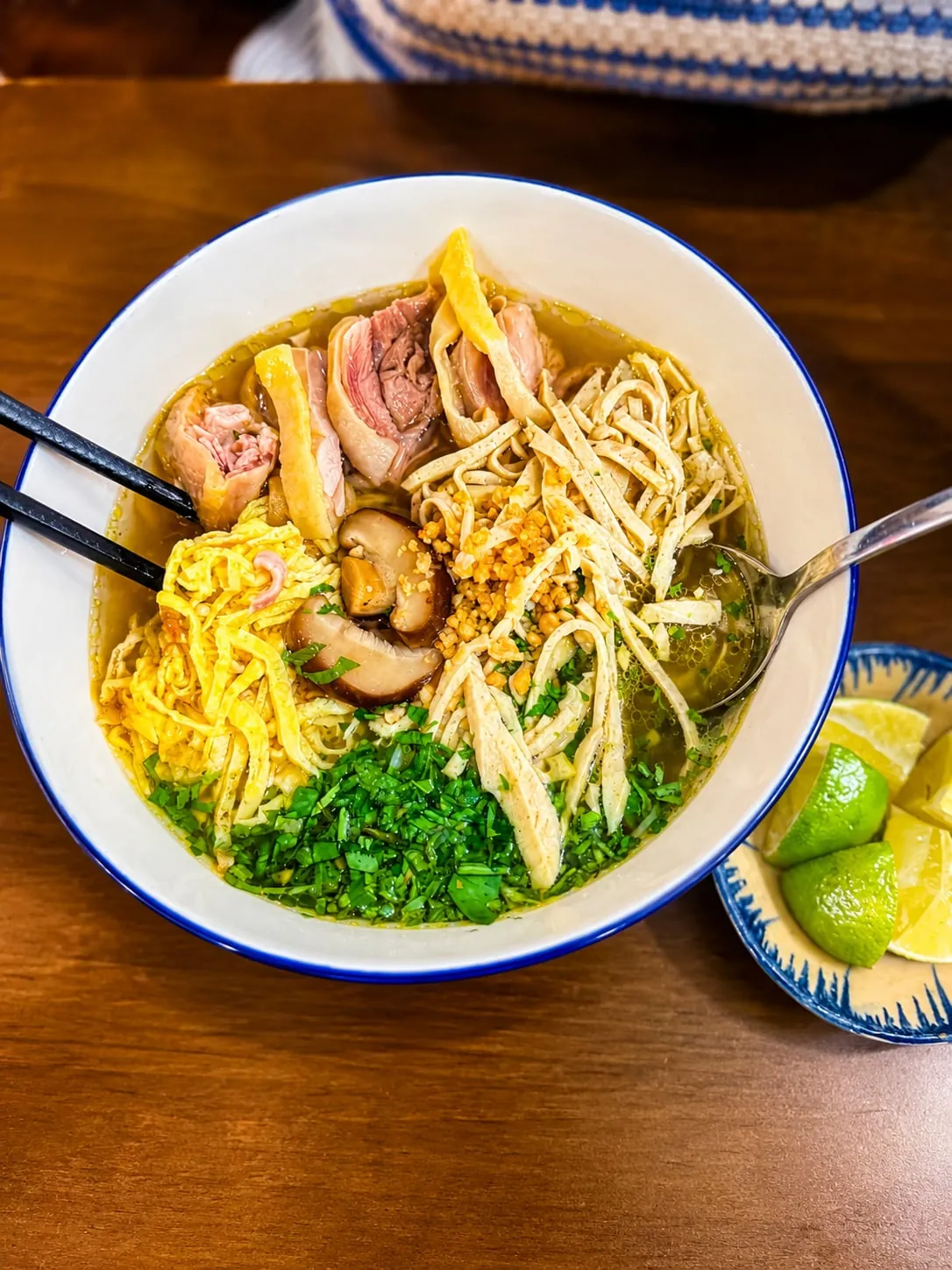
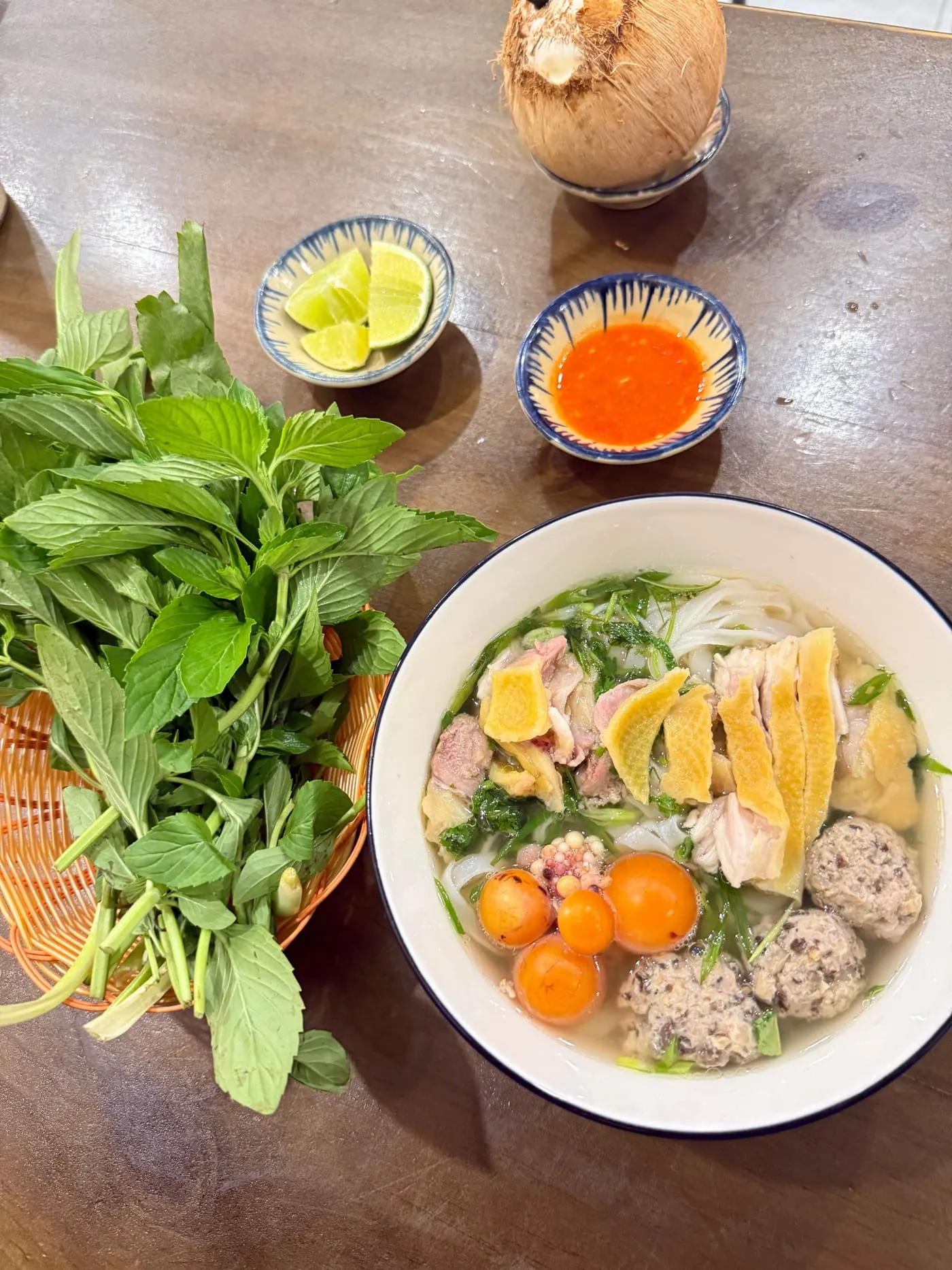
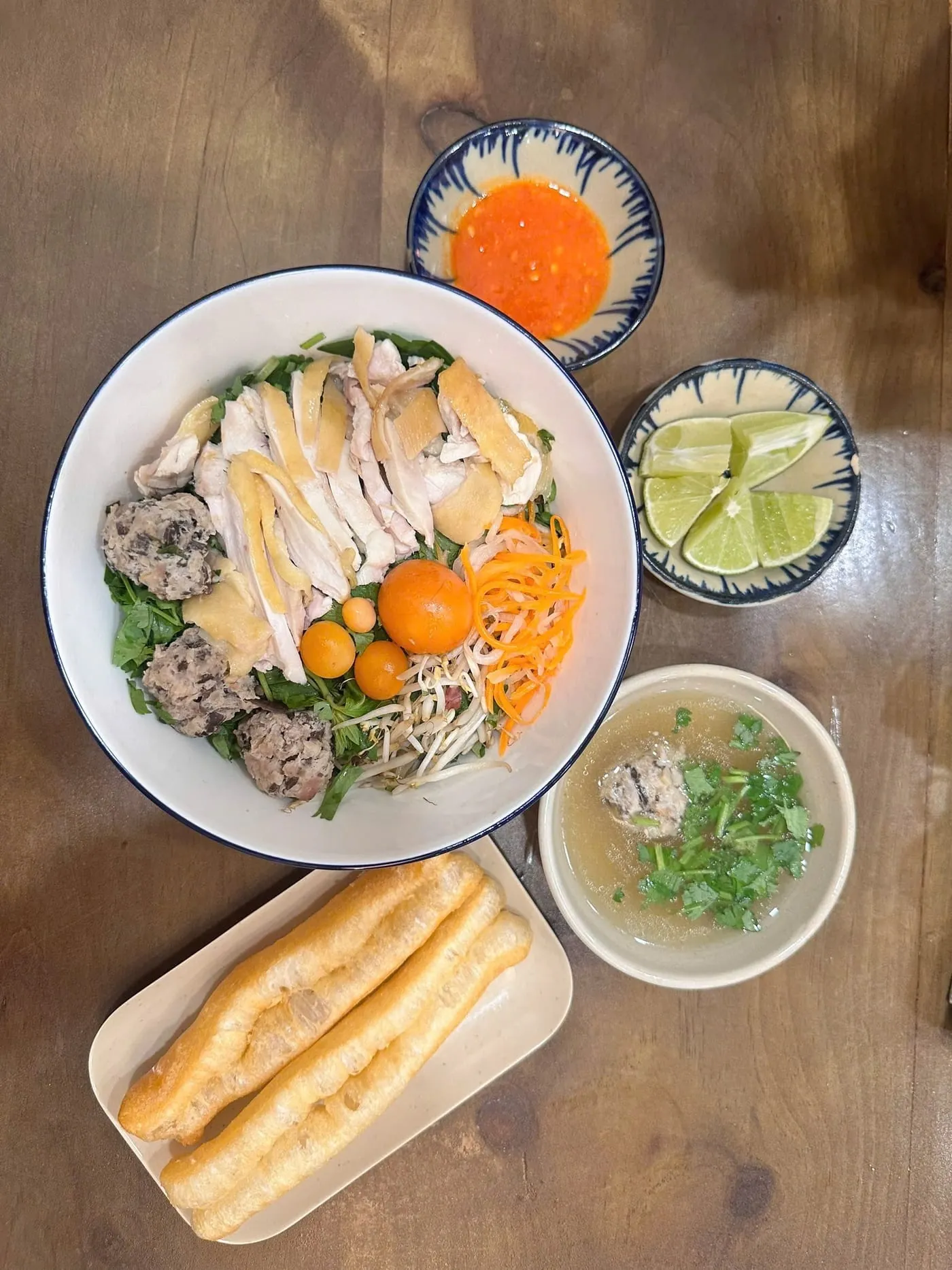
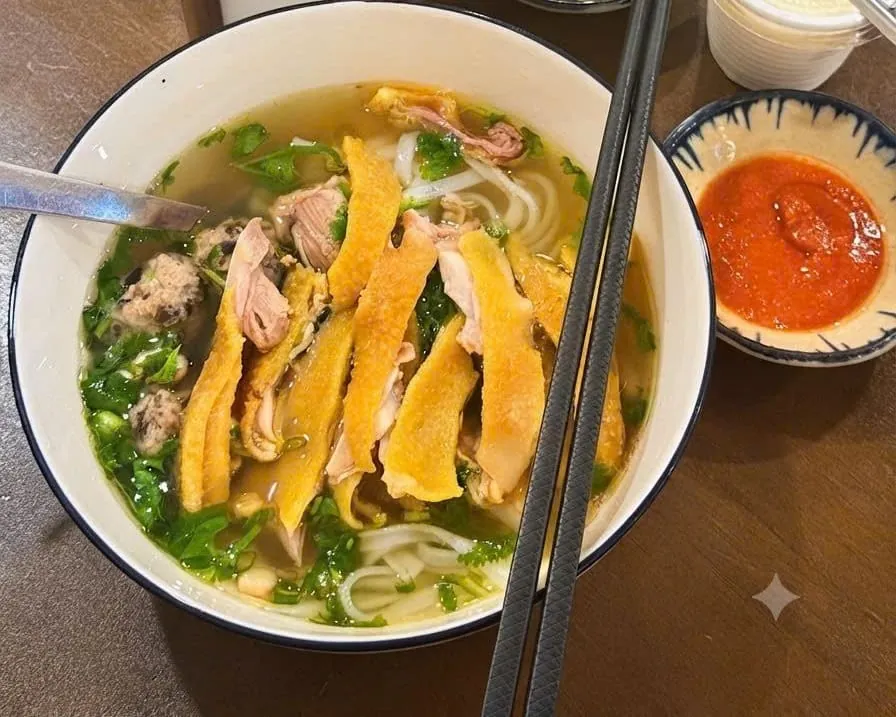
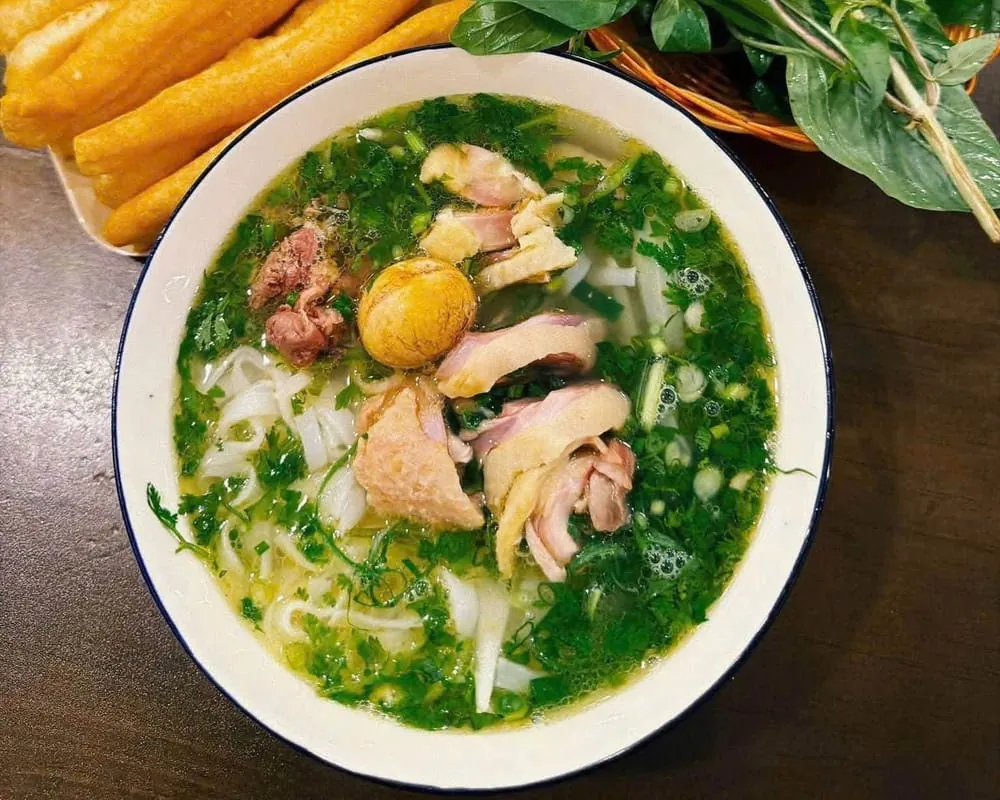
Phở gà with broth is the familiar bowl: rice noodles, chicken, hot broth poured over. For tossed phở gà (phở gà trộn) the noodles are tossed with fresh herbs and roasted peanuts, and the broth comes separately in its own bowl. Bếp Kinh Kỳ serves both.
Choosing a cut: breast, wing and back, thigh
Many people ask me which cut to choose. The restaurant sells chicken pho by cut: Breast, Wing/Back, Thigh and the Special size. Breast is lean meat, usually chosen by people who avoid fat. Wing and back have skin and sinew and a pleasant chew. Thigh is usually softer and richer in flavor. No cut is better than another, so choose by taste, and you can ask the staff when you order what the Special includes.
Where the cook learned phở
I am a native of Hanoi, raised in the Old Quarter. As a child I went out with my grandmother to sell phở on Hàng Ngang street, learning the trade from market mornings choosing bones, from pots of broth watched over low flames, from tasting again and again to suit regular customers. The broth at the restaurant today is still simmered for hours every day, with no ready-made seasoning powder.
Quick answers
- When did chicken pho appear?
- It came after beef pho. In the 1940s and 1950s beef was still expensive, and chicken pho was born from those circumstances.
- How is tossed phở gà different from phở gà with broth?
- Tossed phở gà has the noodles tossed with fresh herbs and roasted peanuts, with the broth in a separate bowl. In phở gà with broth, the broth is poured into the bowl.
- Should I choose breast or thigh?
- For lean meat choose breast; for softer, richer meat choose thigh. Both cuts are available in both Phở Gà Phố Cổ and Phở Gà Trộn.